
Brake repair in Calgary
We replace pads, rotors, calipers and brake lines with parts that meet or exceed OEM specs, and the work carries a 1 year or 20,000 km warranty.
Brake repair at Wow Tire & Auto Repair in NE Calgary starts with an inspection to find out what's worn, then replacing pads, rotors, calipers, hoses or fluid as needed. Parts meet or exceed OEM specifications, and the repair carries a 1 year or 20,000 km warranty on parts and labour. Quotes are free.
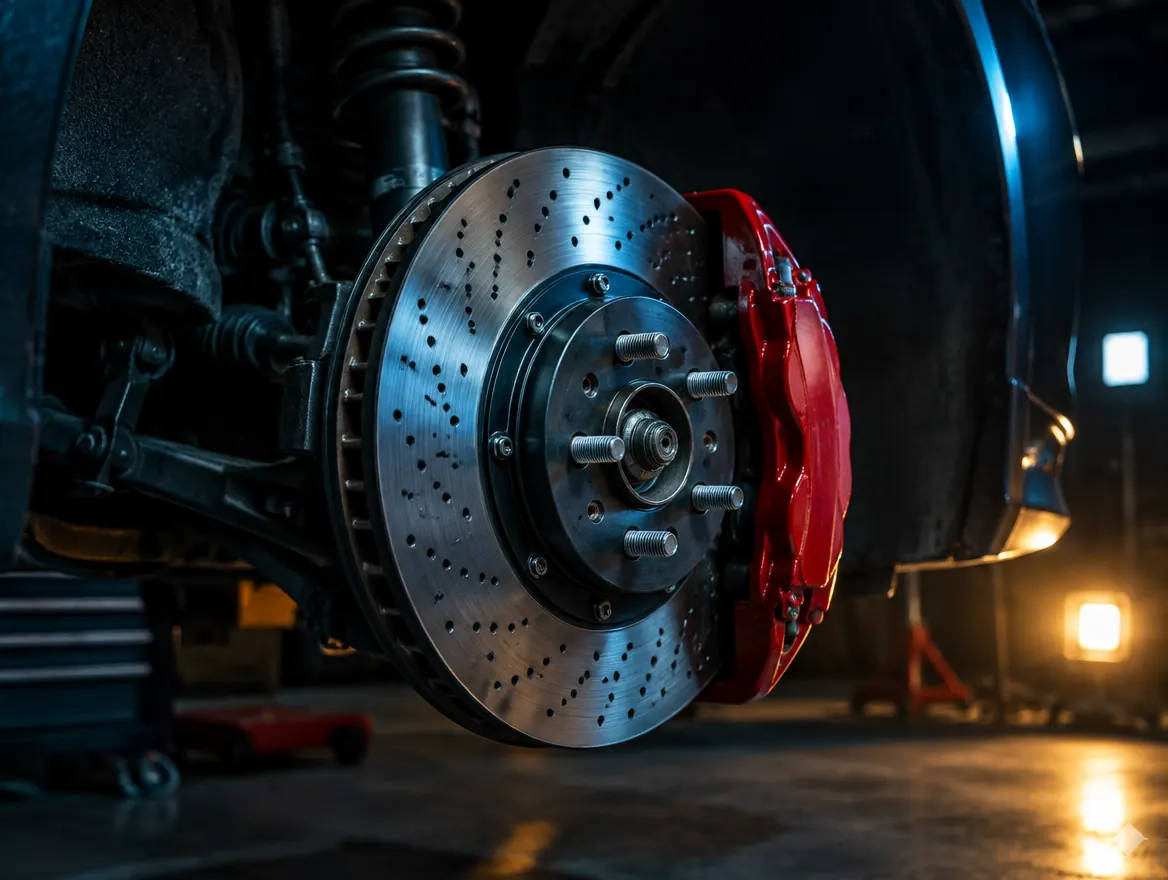
Brakes wear out. That's how they work: the pads press on the rotors, and friction turns your speed into heat. Eventually the pads get thin, the rotors wear or warp, and stopping distances get longer. Our Calgary shop finds what's worn, explains it, and fixes it properly the first time.
Every brake repair is covered for 1 year or 20,000 km on parts and labour, and the parts we install meet or exceed OEM specifications. If your pads still have life left, we'll tell you that too.
Brake warning signs and what they usually mean
Brakes usually give you some warning before they fail. Listen and feel for these:
- Squealing when you brake: often a small metal tab on the pad, called a wear indicator, touching the rotor to tell you the pads are thin
- Grinding or scraping: the pad material is likely gone and metal is hitting metal, which damages the rotors quickly
- Pulsing or vibration in the pedal: usually rotors that are worn unevenly
- A soft or spongy pedal, or one that sinks toward the floor: possible air or moisture in the fluid, or a leak
- The car pulls to one side when you brake: a sticking caliper, a collapsed hose or uneven pad wear
- The brake warning light is on: low fluid, worn pads on some cars, or a hydraulic problem
What a brake repair can include
Not every brake job is pads and rotors. After the inspection, we tell you which of these your car needs:
- Brake pads, front, rear or both
- Rotors, or drums and shoes on vehicles that have them
- Calipers that are seized or leaking
- Brake hoses and lines, including rusted lines
- Brake fluid replacement
- Hardware, slide pins and adjustments
Calgary winters are hard on brakes
Road salt and gravel sit in the brake hardware all winter. That speeds up rust on rotors and lines and can make caliper slides stick, so one pad wears much faster than the other. Brake fluid also pulls in moisture over time, which lowers its boiling point and can corrode parts from the inside.
Spring is a good time for a brake check, after the salt season and before summer road trips. If you're coming in for a tire swap or an oil change, we look at the brakes as part of the multi-point inspection anyway.
How it goes at the shop
Tell us what you're noticing
Noises, pedal feel, pulling, warning lights. The more detail, the faster we find it.
Inspect
We pull the wheels, measure the pads and rotors, and check the calipers, hoses, lines and fluid.
Explain and quote
We show you what's worn and give you a price before any work starts. Quotes are free.
Repair
We replace what needs replacing with parts that meet or exceed OEM specifications.
Test and warranty
We check the pedal and brake operation before you pick it up. The repair is covered for 1 year or 20,000 km on parts and labour.
Questions we hear a lot
Still not sure? Call 403-454-7500 and ask. It's free to ask.
Why are my brakes squeaking?
The most common reason is the wear indicator, a small metal tab on the pad that squeals against the rotor when the pad gets thin. Squeaks can also come from glazed pads, rust on the rotors after a wet night, or missing hardware. A light squeak that goes away after a few stops is often surface rust. One that stays needs a look.
Do I need new rotors every time I replace pads?
Not always. If the rotors are within the manufacturer's minimum thickness and aren't warped, scored or badly rusted, they can stay. Many modern rotors are thin enough that replacement makes more sense than resurfacing. We measure them and tell you which applies to your car.
Is it safe to drive with grinding brakes?
It's not a good idea. Grinding usually means the pad material is gone and the metal backing plate is cutting into the rotor. Stopping distance goes up, and the longer you drive, the more parts you'll end up paying to replace. Book a brake inspection as soon as you can.
Why does my brake pedal feel soft?
A soft or spongy pedal often means air or moisture in the brake fluid, a fluid leak, or a problem with the master cylinder. Since it affects how hard you can stop, have it checked right away. If the pedal sinks to the floor, don't drive the car.
How long does a brake job take?
A straightforward pad and rotor job on one axle doesn't take long. Seized calipers or rusted brake lines add time, and so does waiting on parts. Call 403-454-7500 and we'll tell you what to expect once we know what your car needs.
Get your brakes checked
Call 403-454-7500 for a free brake quote, or stop by 404 40 Ave NE.