

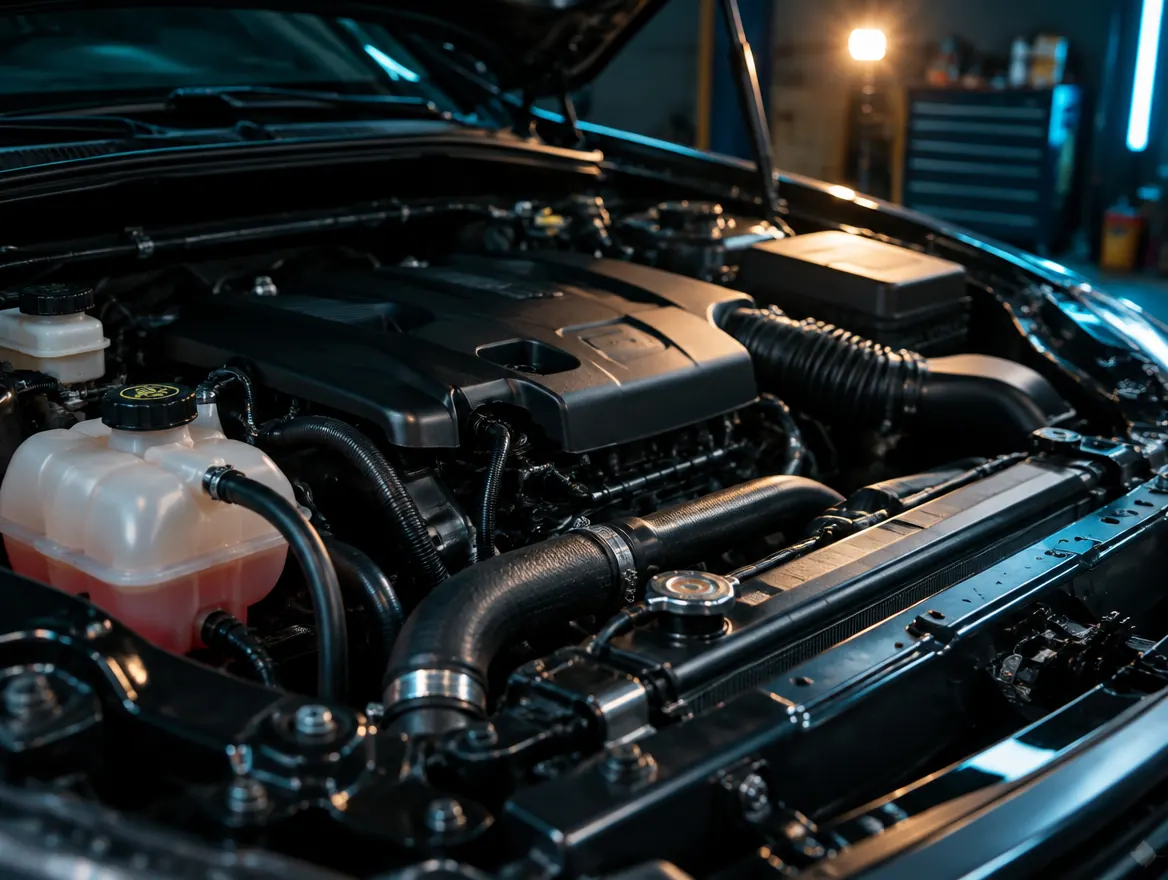
Cooling System and Radiator Repair in Calgary
Your cooling system keeps the engine from overheating in July and keeps the coolant from freezing at -40. We test it, find the leaks and fix what's failing.
Overheating, a sweet smell, puddles of green, orange or pink fluid and a heater that blows cold usually point to a cooling system problem. At our Calgary shop we test your coolant's strength and condition, pressure test the system for leaks and replace worn hoses, radiators, thermostats and water pumps. We also do coolant flushes.
Calgary is hard on cooling systems. A summer climb up Highway 1 heats things up, and a February cold snap tests whether your antifreeze is strong enough to stay liquid. Chinooks swing the temperature back and forth on top of that, and rubber hoses and plastic radiator tanks wear out faster under those cycles.
We test antifreeze quality and strength, find leaks and replace the parts that are failing. Coolant also breaks down with age and turns corrosive, and old coolant quietly eats hoses, thermostats, radiators, water pumps and heater cores. A test now costs a lot less than any of those.
Is your coolant strong enough for -40?
Antifreeze is mixed with water, and the ratio decides how cold it can get before it freezes. A 50/50 mix of standard ethylene glycol coolant protects to roughly -37°C. Going richer, up to about 60/40, takes protection lower, which can make sense in Calgary. Past that, more antifreeze works worse, so straight antifreeze isn't the answer.
Weak coolant can freeze in a cold snap. Frozen coolant expands and can crack the radiator, the heater core or even the engine block, and it can make the car hard to start. Topping up with plain water over the years is the usual way coolant ends up weak. We test the freeze point and the condition of the coolant so you know where you stand before winter.
Signs of a cooling system problem
Losing coolant leads to overheating, and overheating can do serious engine damage. These are the signs we see most:
- Temperature gauge running higher than usual, or a coolant warning light
- A sweet, syrupy smell, especially after a drive
- Puddles under the front of the car in green, orange, pink or blue
- Coolant reservoir that keeps dropping
- Heater blowing lukewarm or cold air in winter
- Steam from under the hood
- Crusty white or green deposits on hoses, clamps or the radiator
What we repair
Once we've found the problem, we fix it. That might be coolant replacement or a flush, a cracked hose, a leaking radiator, a thermostat that's stuck open or closed, or a water pump that's started to weep. We check clamps and the pressure cap too. A cheap cap that won't hold pressure lowers the boiling point and can cause overheating on its own.
How it goes at the shop
Test the coolant
We check freeze protection and condition to see if it's still doing its job.
Pressure test
We pressurize the system to find leaks, including small ones that only show up when the engine is hot.
Inspect the parts
Hoses, clamps, radiator, water pump, thermostat and pressure cap.
Free quote, then repair
We explain what's needed and fix it once you approve.
Questions we hear a lot
Still not sure? Call 403-454-7500 and ask. It's free to ask.
How often should coolant be changed?
Check your owner's manual. Many newer cars use long-life coolant rated for around 160,000 km or several years, while older cars may call for changes every 50,000 km or so. Age matters as much as kilometres, because coolant breaks down and turns corrosive over time. We can test yours and tell you if it's due.
What happens if my coolant freezes?
Frozen coolant expands. That can crack the radiator, the heater core or the engine block, and push hoses off their fittings. Even partly frozen coolant can block flow, so the engine overheats once it's running. If you suspect it's frozen, don't keep running the engine. Get the car somewhere warm to thaw and have the system checked for damage.
Can I drive my car if it's overheating?
No. Pull over safely and turn the engine off. Driving an overheating engine can warp the cylinder head and blow the head gasket, which turns a hose repair into a major job. Don't open the radiator cap while it's hot, because the coolant is under pressure and can burn you. Once it's cooled, call us and we'll advise you on next steps.
Can I just add water to my radiator?
In an emergency, water will get you home. Long term, it dilutes your antifreeze, which lowers freeze protection and reduces corrosion protection. In Calgary that's a real risk come January. Top up with the coolant type your manual specifies, mixed to the right ratio, and have the system checked for the leak that made you top up in the first place.
Running hot or losing coolant?
Call 403-454-7500 to book a cooling system test. We'll check your antifreeze strength before the next cold snap and give you a free quote on any repairs.