
Check Engine Light Diagnostics in Calgary
A code tells you where to start looking. We do the looking, then quote the repair for free.
A check engine light means your car's computer has logged a fault. A solid light means book a diagnosis soon. A flashing light usually means an active misfire that can damage the catalytic converter, so slow down and get it checked right away. At our Calgary shop we read the codes, then test the system to find the actual cause.
The check engine light gets Calgary drivers calling us more than almost anything, and it's widely misunderstood. It can mean a loose gas cap. It can also mean a misfire that's cooking your catalytic converter. The light looks the same in both cases, so the only way to know is to check.
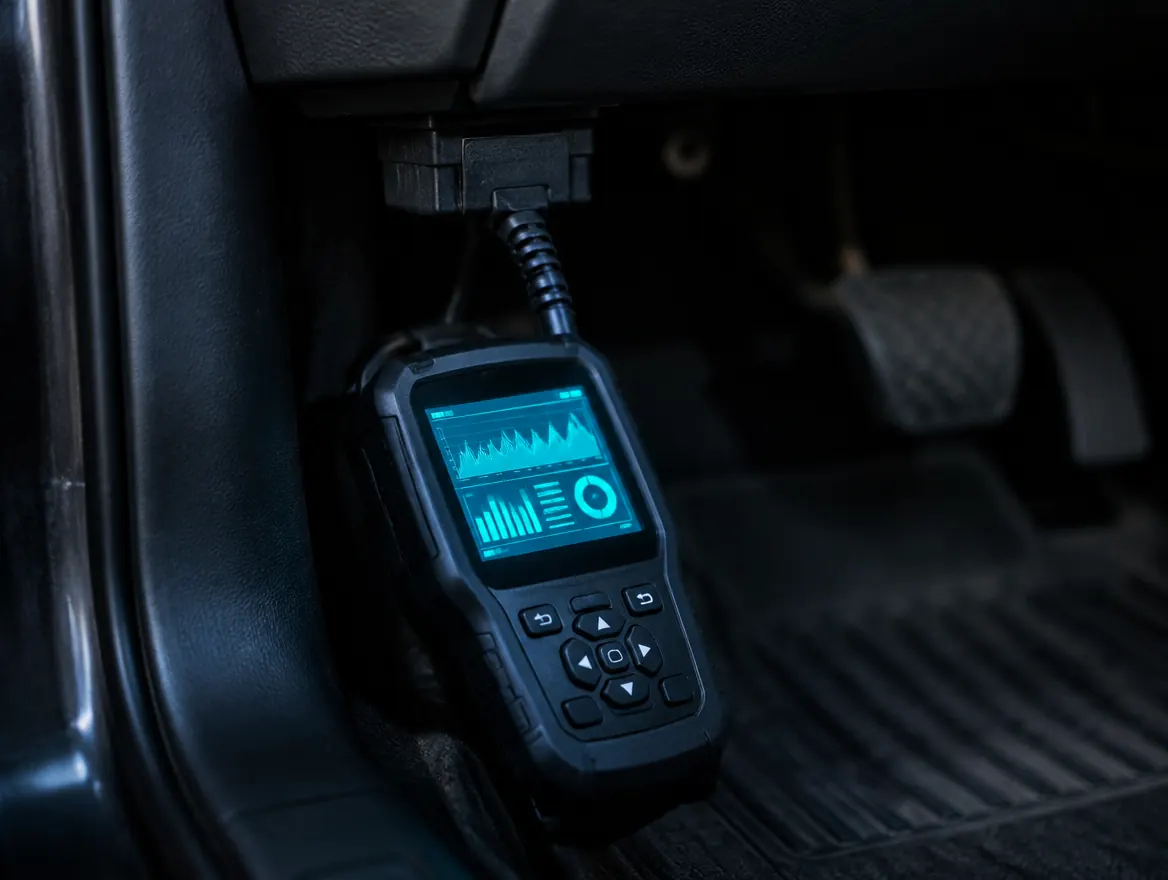
We do full engine and electrical diagnostics with quality scan tools. A code read is the first step, not the diagnosis. After that we test the parts and wiring the code points to, so you're not paying to replace sensors one at a time until the light stays off.
Solid or flashing: what the light is telling you
A solid check engine light means the engine computer has seen a fault and stored a code. The car is usually safe to drive for now, but book it in. Small problems like a vacuum leak or a failing oxygen sensor tend to cost you fuel and can lead to bigger ones if you leave them for months.
A flashing light is different. It almost always means the engine is misfiring badly enough that unburned fuel is going into the exhaust. That fuel overheats the catalytic converter, which is an expensive part. Ease off, avoid hard acceleration and highway speeds, and get it looked at as soon as you can. If the car is shaking or losing power, park it.
What a code read does and doesn't tell you
A trouble code names the system that reported a problem and the condition it saw. It doesn't name the broken part. A lean code (P0171, for example) says the engine is getting too much air or too little fuel. The cause could be a cracked intake hose, a dirty mass airflow sensor, a weak fuel pump or a leaking injector. Each has a very different repair bill.
So a cheap code reader can send you the wrong way. We start with the code, check live data and the freeze frame from when the fault happened, then test the likely suspects.
- Misfire codes: spark plugs, ignition coils, injectors or a mechanical problem
- Evaporative system codes: often a gas cap or a small leak in the fuel vapour lines
- Oxygen sensor and catalytic converter codes: sometimes the sensor, sometimes the converter, sometimes an exhaust leak upstream
- Electrical faults: wiring, connectors, grounds and modules, including problems that come and go
Problems that don't set a light
Stalling, sputtering, hesitation and hard starts often come from fuel delivery, worn spark plugs or a blockage somewhere, and often don't set a light. Describe what the car is doing and when it happens (cold mornings, at highway speed, after a car wash) and we'll take it from there.
How it goes at the shop
Tell us the symptoms
When did the light come on, is it solid or flashing, and does anything else feel different? Those details save diagnostic time.
Scan and review data
We pull stored and pending codes plus the freeze frame data recorded when the fault happened.
Test the system
We check the components and wiring the code points to until we find the cause.
Free quote and explanation
You get a plain description of what failed, what it costs to fix and how urgent it is. Nothing gets done without your approval.
Questions we hear a lot
Still not sure? Call 403-454-7500 and ask. It's free to ask.
Can I drive with the check engine light on?
If it's solid and the car drives normally, you can usually drive it for a short while, but book a diagnosis soon. If it's flashing, limit your driving and get it checked right away. A flashing light normally means a serious misfire, and continuing to drive can overheat and ruin the catalytic converter. If the car shakes, loses power or smells hot, stop driving it.
Can a loose gas cap turn on the check engine light?
Yes. A loose, cracked or missing gas cap lets fuel vapour escape, and the evaporative system logs a leak code. Tighten the cap until it clicks. The light won't go off right away, though. It can take several days of normal driving for the system to retest and clear itself. If it stays on after a week, have it scanned.
Will disconnecting the battery reset the check engine light?
Often it will, for a while. It also wipes the stored data that helps find the fault, and it can reset radio codes and learned idle settings. If the problem is still there, the light comes back. Clearing the code doesn't fix anything, and a car with recently cleared codes can't show a complete emissions readiness status.
Why did my check engine light turn off by itself?
The computer stopped seeing the fault for several drive cycles, so it turned the light off. The code usually stays in memory for a while. This happens with intermittent problems like a sensor that acts up in the cold or a misfire under load. It's worth having the stored code read before the problem shows up again at a worse time.
Got a light on the dash?
Call 403-454-7500 and tell us whether it's solid or flashing. We'll get you booked in for a proper diagnosis and a free quote on the repair.